
 University students in Lebanon are facing war superimposed on a prolonged national crisis, creating an urgent need for scalable tools to detect mental health problems early. We used machine learning (ML) to predict depression, anxiety, and perceived stress among students during the 2024 war in Lebanon, compare algorithms, identify key predictors, and assess how clinical cut-offs influence performance. We conducted a cross-sectional online survey among 225 students at the American University of Beirut. Outcomes were measured using PHQ-9, GAD-7, and PSS-10 with moderate and severe thresholds. Predictors included sociodemographic, lifestyle, conflict-related, and psychosocial variables. Nine supervised algorithms were trained using stratified train–test splits, cross-validated tuning, and balanced versus SMOTE-enhanced pipelines. Models were selected primarily using test-set PR-AUC, with recall as a secondary criterion, and were additionally evaluated using ROC-AUC, Brier scores, and calibration curves. Symptoms were highly prevalent: 61.3% screened positive for moderate-to-severe depression, 59.6% for anxiety, and 73.3% for stress; 27–35% met severe thresholds. Balanced Random Forest performed best for depression and anxiety (PR-AUC 0.93 and 0.88), and balanced calibrated AdaBoost for stress (PR-AUC 0.95), with improved calibration for anxiety and stress. Key predictors included declines in healthy eating, sleep, and physical activity; greater social media use; higher avoidance and lower approach coping; larger household size; and fear for personal and family safety. These exploratory findings highlight the promise of interpretable ML for advancing early mental health risk detection in conflict-affected universities, provided that future studies confirm performance in larger and independent samples. (Access to the Article)
Dr. El Morr publishes a new co-edited book that germinated from on a conference in Lebanon9/14/2026
 How can Artificial Intelligence strengthen our collective capacity to predict, detect, and respond to epidemics—while advancing equity and justice?
As pandemics continue to expose global health vulnerabilities, Artificial Intelligence for Epidemic Preparedness: Innovations and Insights from the Global South brings together scholars and practitioners from diverse disciplines and regions to critically examine how AI can transform epidemic surveillance, health systems, and community resilience without reproducing historical inequities. Spanning four major sections--Foundations and Cross-Cutting Themes; AI for Early Detection, Surveillance, and Prediction; AI Applications for Health Equity and Community Well-Being; and AI Governance, Ethics, and Equity—this volume moves from conceptual and methodological mapping to cutting-edge applications and governance frameworks. Chapters explore innovative AI-driven diagnostics, real-time surveillance, culturally aware design, and decolonial approaches to data and algorithmic decision-making. Contributors interrogate the promises and perils of AI in epidemic preparedness, asking not only what can be predicted, but who benefits and who may be left behind. The book invites researchers, policymakers, technologists, and global health practitioners to rethink AI beyond technical innovation—toward tools and systems that build fairer, more resilient futures in the face of emerging health crises. (Book website)  For years, brain-computer interface belonged to the realm of science fiction, a distant fantasy of minds communicating directly with machines. But for Professor Mohamad Sawan, a fellow of the Royal Society of Canada and the Canadian Academy of Engineering, this vision has been the focus of a lifetime of research.
In 2018, he made a decision that surprised many: he left his established career in Canada to join Westlake University in Hangzhou in Zhejiang province, east China, as a chair professor of microsystems and bioengineering and the founding director of the CenBRAIN Neurotech Center of Excellence. Eight years on, he sees that move as an inevitable step toward the future. Sawan's path to China was not impulsive. Born in Lebanon and educated in Canada, he brought a naturally cross-cultural outlook to his work. For more than two decades, he visited China frequently for academic exchanges, yet those trips always felt too brief. Beneath his professional curiosity lay a deeper question: How is this ancient civilization now reclaiming its global standing with such speed? When the invitation from Westlake University arrived, he felt it was almost destined. He had long dreamed of coming to China, and the offer struck him as tailor-made for his ambitions. He believed sci-tech innovation was growing very fast everywhere in China, and the future belonged to it. He wanted to be part of that future... (continue reading...)  What kind of world is Artificial Intelligence building—and for whom?
As AI technologies rapidly reshape our societies, economies, and bodies, Shaping AI: Ethics, Society, and the Future of Technology brings together a diverse array of scholars to interrogate the promises, politics, and perils of AI from critical, inclusive, and interdisciplinary perspectives. Spanning three major sections--Foundations and Applications, Philosophical and Critical Perspectives, and Ethics, Governance, and Social Impact—this volume explores the deep entanglements of AI with disability, gender, race, capitalism, coloniality, and the environment. Chapters examine real-world applications from health systems and biometric surveillance to transport and platform economies, while others engage with philosophical frameworks and decolonial theories to rethink what responsible AI means today. Contributors from across disciplines and geographies interrogate the very foundations of AI, highlight its ethical blind spots, and offer bold visions for technology that centers justice, equity, and human dignity. Whether you are a scholar, policymaker, student, or technologist, this book offers the critical tools to rethink AI not just as innovation—but as a site of struggle for a more just future. (Book website)  What does it mean to build Artificial Intelligence for a just world—and for whom is justice imagined?
As AI systems deepen their reach into health care, education, borders, social media, and intimate life, AI for a Just World: Power, Liberation, and the People Left Behind gathers a bold interdisciplinary community of scholars and practitioners to ask hard questions about equity, oppression, and technological futures. Spanning four wide-ranging sections--Artificial Intelligence and the Pursuit of Equity; Disability Justice and the Limits of Technoableism; Gender, Violence, and Social Reproduction; and Coloniality, Liberation, and Other Ways of Knowing—this volume travels from the clinic to the cloud, from the classroom to the border, to expose how power and discrimination are reproduced in algorithmic design and deployment. Chapters rethink fairness in medical AI, challenge ableist frameworks in STEM and higher education, interrogate misogyny and violence encoded into digital platforms, and confront the colonial logics structuring migration control and geopolitical analysis. Contributors also chart pathways forward: equity-by-design in health systems, disability-centered approaches to AI development, Indigenous relational ethics, and posthumanist possibilities for reimagining our relationship with intelligent technologies. Provocative and visionary, AI for a Just World provides critical tools for scholars, technologists, policymakers, and activists determined to ensure that AI does not merely innovate—but liberates. (Book website)  Dr. Christo El Morr and Dr. Yahya El-Lahib co-edited with their colleague Dr. Rachel Gorman a new book titled "Beyond Tech Fixes: Towards an AI Future where Disability Justice Thrives" covering of the interplay between AI and disability (Springer, 2005). The book is expected to be avaiable soon. "This book offers a bold and critical examination of the intersections between artificial intelligence (AI) and disability justice. Rather than framing AI as a neutral or purely beneficial tool, the book interrogates how AI systems reproduce ableism, deepen systemic exclusions, and perpetuate colonial, neoliberal, and corporate power structures. It challenges the prevailing reliance on "tech fixes"—improving datasets or tweaking algorithms—and instead insists on addressing the deeper social, political, and ethical dimensions of AI development and deployment. Through a disability justice lens, it highlights the complex realities faced by disabled communities and emphasizes the need for approaches that dismantle ableism rather than superficially enhance accessibility. Covering topics such as algorithmic bias, data colonialism, technoableism, and the militarization of AI, this book foregrounds critical frameworks including design justice, data sovereignty, and participatory governance. It draws on diversescholarly perspectives and activist insights to propose actionable pathways toward more accountable, equitable, and inclusive AI futures. By centering disabled people’s experiences and knowledge, the book offers not only critique but also visionary strategies for transforming AI systems to serve justice rather than entrench oppression."
Dr. Abdulmotaleb El Siddik, CLAF member, head of the 𝐌𝐮𝐥𝐭𝐢𝐦𝐞𝐝𝐢𝐚 𝐂𝐨𝐦𝐦𝐮𝐧𝐢𝐜𝐚𝐭𝐢𝐨𝐧𝐬 𝐑𝐞𝐬𝐞𝐚𝐫𝐜𝐡 𝐋𝐚𝐛𝐨𝐫𝐚𝐭𝐨𝐫𝐲 (𝐌𝐂𝐑𝐋𝐚𝐛), University of Ottawa, signed a strategic agreement, with the Indian Institute of Technology, Ropar ANNAM.AI lab. The agreement was executed by Prof. Abdulmotaleb El Saddik from MCR Lab and Prof. Pushpendra P. Singh, Project Director of ANNAM.AI in the presence of Prof. Mukesh K. Saini, Project Lead - Digital Twin, ANNAM.AI, along with their respective teams. "This strategic partnership will focus on applying AI, machine learning, and simulation techniques to create accurate, actionable digital twins of crops to improve crop management, yield prediction, and overall sustainability in agriculture. The collaboration will also cover Knowledge sharing, capacity building, and Joint research publications," said Dr. El-Siddik on linkedin.  n March 3 and 4, 20205, Dr. Christo El Morr, CLAF member, co-organized with Dr. Vijay Mago (York University), Dr. Anoop George from the Indian Institute of Technology, Palakkad, and his colleagues, an International Symposium on AI, bringing together scholars & researchers from India & Canada to discuss the social implications of AI.   Dr. Mohammad Sawan received the Order of Merit of the Lebanese Emigrants We are thrilled that Dr. Mohammad Sawan from CLAF received the Order of Merit of the Lebanese Emigrants. "Decorated by this honorific order of Emigrants is to recognize my significant achievements in science, and to have served my community, as well as to positively represent and promote Lebanese culture around the world. Warmest thanks are due to H.E. Fadi Ziadeh for taking care of this decoration ceremony, and to everyone who supported and selected me to receive this honor. Wishing all the peaceful conditions to my birth country to find back the greatest Lebanon." Said Dr. Sawan during the ceremony. 
 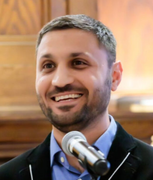 "Research on blocking inflammation in gout by Ali Abdul-Sater, associate professor in the Faculty of Health, has been named one of Arthritis Society Canada’s top 10 research advances of 2023" (read more).
  Dr. Christo El Morr publishes the 2nd edition of his book "Introduction to Health Informatics: a Canadian Perspective"
"The first resource of its kind, Introduction to Health Informatics examined the effects of health informatics on healthcare practitioners, patients, and policies from a distinctly Canadian perspective. This second edition has been thoroughly updated to reflect current trends and innovations in health informatics and includes new figures, charts, tables, and web links" (the publisher). “This health informatics textbook keeps pace with the rapidly evolving field, providing a thorough overview of the key foundational concepts within the field and their interactions with people, networks, systems, and the field of healthcare, while also integrating future applications and technology (machine learning and AI) that will ensure readers have the most current knowledge in the field. The many practical assignments, reflective activities, and interviews provide unique opportunities for application based learning.”Pria Nippak, PhD, Associate Professor and Academic Coordinator, School of Health Services Management and Health Informatics Certificate, Toronto Metropolitan University “A highly interactive textbook that engages students in foundational concepts of health informatics. By weaving together his experiences, research findings, practical models and exercises within each chapter, Christo El Morr provides a treasure trove for us in and out of the classroom. He has produced a text that is stimulating, fun to read, and highly relevant in the rapidly evolving field of health informatics. A must-read!” Theresa Mudge, MHA, CHE, Professor, Health Informatics, Sault College Dr. Abdallah Shami has received the 2023 R.H. Tanner Industry Leadership Award from IEEE Canada5/25/2023
 CLAF member, Engineering Professor Dr. Abdallah Shami has received the 2023 R.H. Tanner Industry Leadership Award from IEEE Canada. Dr. Shami "has made pioneering contributions to technology transfer that have been integrated into the products of major international companies. He leads the Optimized Computing and Communications (OC2) Laboratory, where his team has gained an international reputation for its strong contributions to both academic and industrial research." ; read the full announcement here.
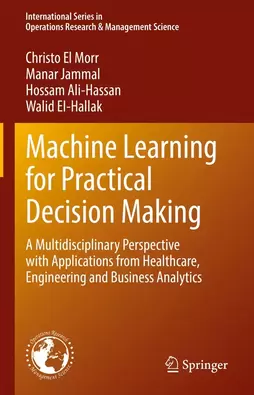 CLAF members, professors Christo El Morr, Manar Jammal, Hossam Ali-Hassan published a new book co-authored with Mr. Walid El-Hallak.
Book summary: In modern business, it is important to learn and understand the various data analytics approaches. But you cannot do that without a solid understanding of machine learning algorithms. If you are new to Machine Learning and its applications, then this book is for you. This book covers fundamental concepts in Machine Learning in a friendly and easy-to-understand language with hands-on examples that you can implement right away. Link to the book website 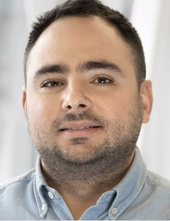 "Élie Bou Assi, a researcher in the Neuroscience Research Theme, has been recognized by the Brain Canada Foundation as one of 20 Future leaders in Canadian Brain Research.This important mark of recognition comes with a $100,000 grant over two years. With the 19 other Canadian award recipients, Élie Bou Assi will set out to explore bold avenues of research to refine our understanding of the brain’s workings.
Since 2019, Brain Canada has launched its Future Leaders in Canadian Brain Research funding competition every year to support researchers starting their careers, namely, within five years of starting their first independent research position at a university. This program is funded by Health Canada through the Canada Brain Research Fund and is financially supported by the Azrieli Foundation, with support from the Alvin Segal Family Foundation, The Arrell Family Foundation, The Barry and Laurie Green Family Charitable Trust, and The Erika Legacy Foundation." (Centre de recherche du CHUM (CRCHUM) )  Christo El Morr has recently publsihed his second colleciton of poems "One Rose Before the Sun" (Arabic), Arab Scientific Publishic, Beirut, 2022 (Amazon, Publisher website) "Love poems inhabited by the sun, by a poet in love who stands at the top of creativity, scattering his letters kisses that embrace his lines, so we are faced with a crazy, rebellious, passionate and romantic lover poet to the fullest extent. It is Christo El Morr wholly immersed in pure metaphor, pictorial condensation, and question-inducing polemic; about this enigmatic world, the seven heavens, and the wondrous kingdom." (Pulbisher) 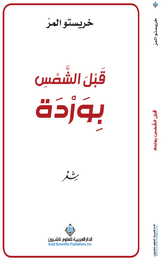 خريستو المرّ، "قبل الشمس بوردة"، الدار العربيّة للعلوم - ناشرون، بيروت، 2022قصائد حبّ مسكونة بالشمس، لشاعر عاشق يقف على قمّة الإبداع، ينثر حروفه قُبِلًا تحتضن سطوره، فإذا بنا أمام شاعر عاشق مجنون، متمرّد، شغوف ورومانسي إلى أبعد حدّ، إنّه خريستو المرّ، الغارق كلّيا في المجاز المحض، والتكثيف الصوريّ، والجدل المحرّض على السؤال حول هذا العالم الملغّز، والسماوات السبع، والملكوت المدهش.
يقول شاعرنا في قصيدة "هناك": أن أكون هناك هو المُشتهى/ كي تصير ظلالي شموسًا / وأشتهيني إلهًا/ كما أًشتهى/ كنوز الشواطئ حتفي / لذا أكتفي بالذي ليس يكفي / بوجهٍ مضيءٍ تحبّه نفسي / كم تقفّت خطاي رؤايَ / فغابت بلادٌ أمامي / كجسم الغمام / الذي يتفتّت حلمًا، / كرنّة خلخال حبّك حين تذوب / وتُغشي بأحجيةٍ / سدرة المنتهى (...)" في هذا الديوان قصائد حبّ، ورثائيّات، ومناسبات، تطلّ ثيماتها على ثنيّات الفرح حينًا، والحزن حينا أخرى، ويطلّ بينهما شاعر نفسه أمّرة بالعشق، فكان جريئًا واضحًا في تعبيره، وصوره المستبيحة حدود التخيّل أحيانًا، ولكأنّه ينحت الشعر ليكون على شكل حبيبته. إنّه الطفوح الشعريّ بكلّ ارتحالاته وكينونته وانزياحاته والذي لا يقدر عليه إلّا شاعر مثل خريستو المرّ. يقول الشاعر في قصيدة "أجمل الليل": أجمل الليل / هو الذي أفتح فيه عينيّ / حتّى أرى / نَفَسَ الحبّ / في ظلّ شفاهك ساهرًا / أجمل الليل / هو الذي أفتح فيه عينيّ / حتّى أراك وأرى الحبّ منتظرًا / في هلال شفاهك / كي يشعل الوردة الحائرة (...)" يضمّ الديوان قصائد في الشعر العربيّ الحديث جاءت تحت العناوين الآتية: "في الغاب"، "بلادُنا وحبُّنا"، "الجسرُ البعيد"، "أجملُ اللَّيل"، "قبل السفر بقليل"، "سِعَة"، "هناك"، "محمّد"، "صلاة ضحايا"، "صمت"، "قول"، "الغريب"، "نصر؟"، "كيف؟"، "ثورة"، "أمنية"، "أنت حبيبتي" (...) وعناوين أخرى.  Mohamad Sawan is an international authority on biomedical engineering. He is credited with several major breakthroughs, including chip-integrated implantable devices for the measurement and electrical stimulation of the visual cerebral cortex in order to restore sight to the blind, work that has received international recognition. His scientific contributions have been applied in a variety of specialties including audiology, urology, respirology, vision, epilepsy, and limb movement.
Read more here  CLAF member Dr. Rula Jurdi publishjes a new collelction of poems. 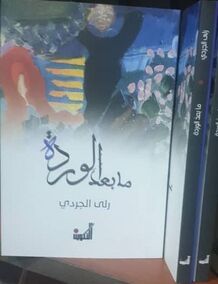 رلى الجردي، ما بعد الوردة، دار التكوين، دمشق،٢٠٢٢
أفلامُ المدنِ نسخةٌ عن القلبِ، طاحِنة. معدَّاتُ الحفرِ تستيقظُ لتدفنَ نُجومًا لطيفةَ المعشر. بغدادُ الشوارعُ توبِّخُ المشيةَ. الحبُّ يتفرَّغُ للانقسام. (من قصيدة "بلا كيف")  "Research by Ali Abdul-Sater, a York Research Chair in the Regulatory Mechanisms of Inflammation, and an assistant professor in the School of Kinesiology & Health Science, Faculty of Health, has determined that a specific protein, TRAF1, holds the key to controlling inflammation in rheumatoid arthritis and a specific mutation to the protein can reduce the amount of inflammation the joints experience. With funding from the Canadian Institutes for Health Research, the Arthritis Foundation and York University, Abdul-Sater and his research team are currently testing their findings in mice and hope the results will eventually translate to humans." (YFile, York University) Read More here
 Professor Mohamad Sawan published a new book titled "Handbook of Biochips: Integrated Circuits and Systems for Biology and Medicine"
The book was released early in January 2022. It is done to provide readers content related to all types of biochips, including fundamentals of microelectronics and biomaterials interaction with various living tissues, and focusing on biochips at the brain-machine interface. Published in two volumes, a total of 1340 pages, the 61 chapters are the result of huge efforts spent by a truly international group of experts to offer the best landscape in the field of biochips. "The book provides a broad survey of the field of biochips, including fundamentals of microelectronics and biomaterials interaction with various, living tissues, as well as numerous, diverse applications. Although a wide variety of biochips will be described, there will be a focus on those at the brain-machine interface. Analysis is included of the relationship between different categories of biochips and their interactions with the body and coverage includes wireless remote control of biochips and arrays of microelectrodes, based on new biomaterials." https://link.springer.com/referencework/10.1007/978-1-4614-3447-4 Dr. Nahida El Assi published and article about reading strategies in the classroom
What are reading comprehension strategies? When a big percentage of students fail in reading, one might put all the blame on the teacher saying they are not teaching the reading skills and strategies, or they are not taking into consideration the learners’ preferred learning styles, or they are not addressing learner’s needs or their tests do not match with the teaching style. In fact, there is a lot more to the reading comprehension process. It is a complex process that is influenced by a number of factors, namely the purpose of reading, the structure of the text, the level of semantic and syntactic complexity, the cultural difficulty of the text, and the reader’s cognitive and metacognitive strategies and age. Follow the link to read the full article : www.structural-learning.com/post/reading-comprehension-strategies-in-the-classroom
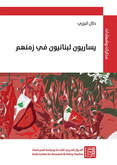
 صدر عن المركز العربي للأبحاث ودراسة السياسات، في سلسلة مذكرات وشهادات، كتاب لدلال البزري بعنوان يساريون لبنانيون في زمنهم. يتألف الكتاب من 368 صفحة، ويُعنى بيساريين شيوعيين في زمنهم، بدءًا من ستينيات القرن الماضي وسبعينياته: سيرةً وممارسة وفكرًا وخواتيم، بصفتهم ثوريين
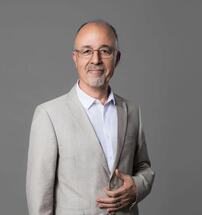 At Westlake University, Professor Sawan is leading the Cutting-Edge Net of Biomedical Research and Innovation (CenBRAIN) group consisting of around 25 people, within which are four research professors, 15 PhD students, 2 postdocs, and a number of research assistants and visiting students. CenBRAIN has outstanding lab resources consisting of two complementary sections: Microelectronics and Biological oriented equipment. Major equipment in the Microelectronics’ section includes probe station, wire bonder, flip chip bonder, 1/f noise analyzer, picosecond laser machinery, for chip testing, bonding and packaging. Major equipment in the Biology’s section includes Sartorius molecular interaction analyzer, Zeiss inverted high resolution microscope, cell incubator and shaker, hyperspectral imaging analyzer, and potentiostat electrochemical workstation, for biomedical devices testing and characterization, and wearable fNIRS/EEG device for brain activity monitor and brain disease diagnosis. Read More.
|
CLAFCanadian Lebanese Arab Federation Archives
September 2026
Categories |



 RSS Feed
Proudly powered by Weebly